11:53
by deri••378 views
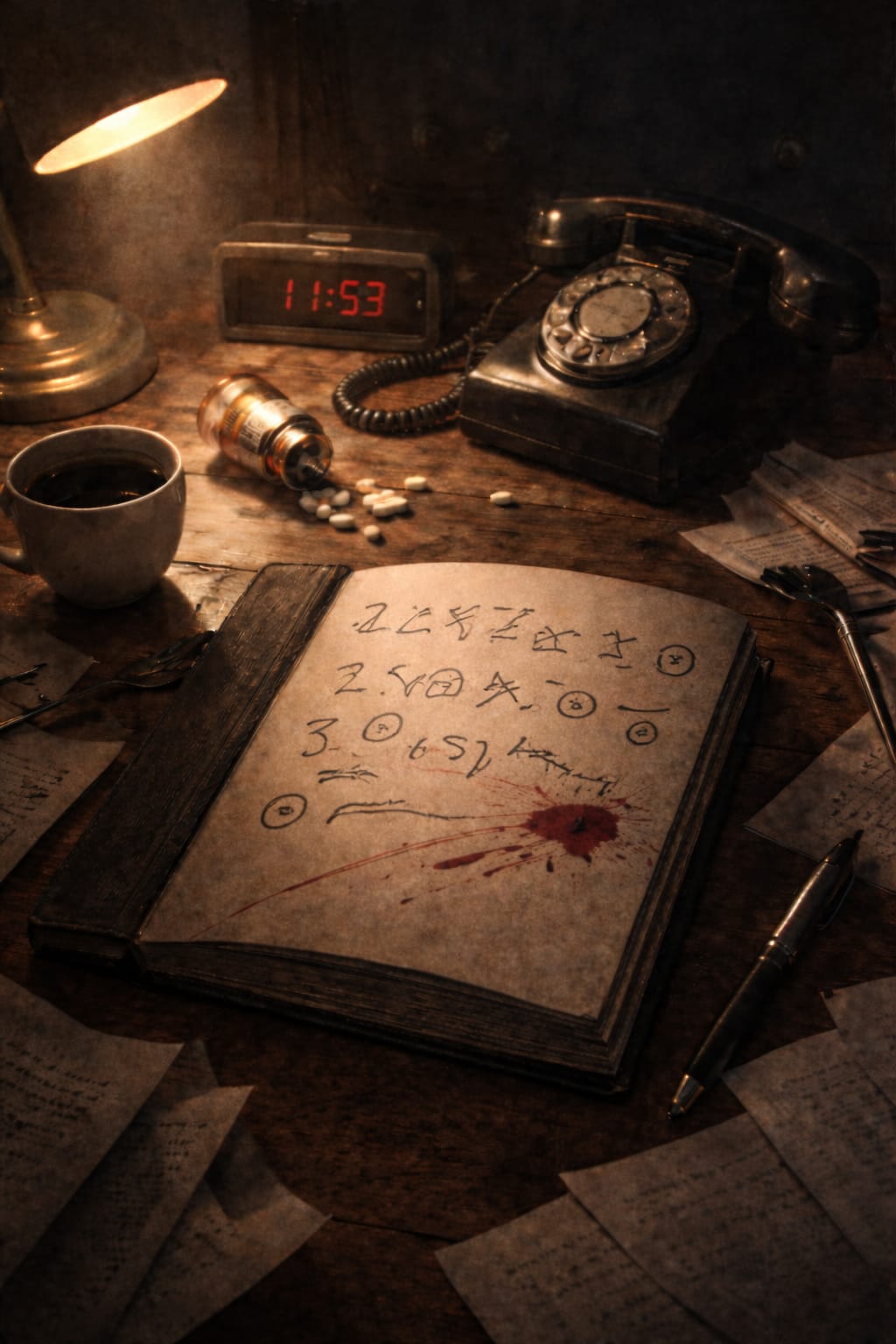
When he picked up, the person on the other end was almost hanging up. He rarely answered calls; and when he did, he always did it in the last second, after teetering between answering and not. Seeing the name on the screen made him uneasy. Whenever that man called, trouble followed. Another thankless chore was about to land in his lap. It was his agent. The voice across the line jumped in with excitement.
How are you?
Up until now, I wasn’t doing too badly. Whether I’m fine now, I’m not sure. That depends on what you’re about to say. What’s wrong this time? Go on then, tell me.
Ah! No. Nothing’s wrong. Actually, everything is great. Your latest book has reached one hundred thousand copies. In such a short time, that’s a huge success. Everyone loved it.
You’re not going to let me forget, are you?
Forget what?
Never mind. Tell me what you want.
The agent’s mood dipped for a moment, but he pulled himself together and continued.
I don’t want anything. You know, we made a deal with Hamlet Bookstore. For the signing, I mean. You asked me to remind you a day before. You said you didn’t want it to slip your mind “because of how busy things are.”
Was that tomorrow?
Yes, at two. But we have to be there by one at the latest.
Alright, alright. Shove me into that sticky crowd. I told you fifty times, I don’t want it. I hate signings. You keep saying it yourself: the book is selling anyway. What do you need a signing for? You’re always going to do something that sets me off.
If you want, I can say you’re sick. I can cancel it.
Too late now. Whatever. Come pick me up tomorrow. Call before you come.
When he hung up, he took his anger out on the books stacked on the nightstand. He swept them onto the living-room floor and kicked them for good measure. He didn’t want to sign anything. Being among people was torture. Home was his bunker. Being there gave him safety and calm. Whenever he had to leave, which he never did unless he was forced, panic attacks that seemed endless would hit him. Now, the thought of going to a signing was already triggering palpitations, tremors, the edge of a breakdown. And in his mind, it was all the agent’s fault.
Truth was, he could have arranged all of it himself. He could have set signings according to his mood, planned promotion events, scheduled university talks without needing anyone. But he couldn’t. He had advanced forgetfulness. And he didn’t have the skill to track organization on a computer. Age had made him more old-fashioned than he liked to admit. He wrote everything down in notebooks: story drafts, errands, even recipes. Then he forgot where he put the notebooks.
That was why he’d gone to a doctor. They checked his blood, sent him home with a bag of vitamins. Still, nothing cured the forgetfulness. Stranger still, it didn’t follow a pattern. Sometimes he forgot the simplest tasks; other times he couldn’t forget at all, as if the thought were nailed into his mind. Even if he wanted to forget.
The day of the signing, they left at noon. The road refused to end. For a writer who didn’t want to go, it was maddening. They arrived at the bookstore right on time. Everything was set up; readers had already started to trickle in. It was obvious it would be crowded. When the signing hour came, he prayed for this madness to end quickly. The line kept growing. People waited with shining excitement to have his latest book signed, to take a photo with him. It made him more and more restless.
After hours of torture, the line finally ended in the late afternoon. He was exhausted. All he wanted was to get home. A violent ache pounded behind his eyes. He took painkillers, but it wouldn’t fade. He told his agent he needed to go home, fast. After another journey that dragged on forever, he finally made it back.
He felt like he was dying from fatigue. He made himself a quick sandwich, swallowed it with a glass of water. He took another painkiller and waited, but the pain still wouldn’t go. He picked up one of his blank notebooks. He wanted to write something. His mind was empty; he felt used up. Aside from his latest book, he wasn’t even pleased with what he’d written so far, and it drove him insane.
He decided to lie down. Sleep would do him good. He was getting ready to climb into bed when a savage spasm stabbed through his head. The room spun violently. He collapsed where he stood. After that, he remembered nothing.
When he came to, he realized he’d been unconscious for half an hour. He didn’t have the strength to go to the hospital right away. He would rest a bit, then go. He was afraid he might have hit his head when he fell.
He lay in bed for fifteen, twenty minutes. Then he dressed slowly, avoiding sudden movements. He called a taxi and went to the nearest hospital. The emergency room was packed beyond anything he expected. He registered and waited, calm on the outside, hollow inside.
When it was his turn, he told the young doctor, late twenties, drained of color from exhaustion, what had happened. The doctor did what he could within the limits of the situation: checks, questions, quick exams. He found nothing alarming. He said his blood pressure was a bit low and might have dropped even further when he fainted. Still, he recommended that he see a neurologist as soon as possible.
The writer wasn’t obsessive about health, but fainting had scared him. He quickly found a neurologist and booked an appointment. The date was the next day. Until then, he had no other complaint besides mild headaches. The headaches weren’t new. He’d had them for a while. But he’d never fainted before.
On the day of his appointment, he went alone again, by taxi. He told the doctor everything: the headaches that wouldn’t quit, the evening he passed out, the brutal pain that had punched into his skull. When the doctor asked, “Are you taking any medication?” he said, “Only vitamin B12.” The doctor ordered a battery of tests. An MRI and a CT scan. The results would be ready in two days, he said.
Two days later, he was back in the office.
Hello, doctor. I guess the results are in?
Let’s see. They arrived just before you did. I haven’t looked yet.
The writer tried to hide his fear as he watched the doctor, searching his face for meaning. The doctor stared at the screen. Then his gaze tightened, his expression fell, his hands started moving without him noticing. The writer saw it all. His own body tensed.
Is there a problem, doctor?
Look, I don’t know how to say this in the simplest way. So I’ll take the shortest route. There’s a mass inside your skull. Its size worries me somewhat. But you should know: we don’t yet know whether it’s benign or malignant. Whatever it is, I don’t want you to panic. We have appropriate treatments for all of it.
While the doctor kept talking, the writer was in another world. Only one thought ruled him: I’m going to die. His mind flooded uncontrollably; he fought not to cry. Of course he knew he would die one day. What tore at him was the idea of dying slowly under the crushing weight of the illness, worn down a little more each day.
He couldn’t listen anymore. He asked to be excused and left the room in silence.
He went straight home. The question marks in his head had vanished. He now knew why he was so forgetful, why his head ached. But he was determined. He wouldn’t let an illness erase him. Chemotherapy, the pounds he’d lose day by day, hair falling out… and for what? To make death more dreadful, he thought.
He wouldn’t allow it. He would never allow it.
In the days that followed, they ran countless tests. To determine whether the tumor was benign or malignant, they decided on a pathological examination. The doctor wanted to do it as soon as possible, but the writer wasn’t ready for the answer. He made excuses. He said he had signings, that he would be traveling from city to city. The doctor protested angrily, but in the face of the writer’s insistence, he could no longer fight. They reached a decision together: the pathology would be done three months later.
After leaving the clinic, he set off for home. Distance no longer mattered; he would walk. With steady steps, without pushing himself too hard, he reached his apartment in exactly one hour and twelve minutes. He locked the door carefully. Put his phone on silent. And let the tears loose. He cried so much that he fell asleep while crying.
When he woke, his hand went to his phone on its own. Five missed calls, two messages. His agent. He didn’t call back. He turned the phone off completely. He didn’t want to speak to anyone.
Why is it, he thought, that I can forget everything and everyone, and still I can’t forget some people? The ones I most want to forget.
He put on his sweatpants, sat in his reading chair, and stared at the wall for hours. The doctor’s words kept circling in his head.
“A mass in your brain. It could be malignant.”
He had never felt this close to death. Death had never been this close. The thought of leaving everything behind and going, of leaving no piece of himself in the world, except what he’d written, shattered him. He spent days inside those thoughts.
In time, he grew accustomed to the idea of death. After all, nothing was over yet. Maybe it was benign. And even if it wasn’t, he would find a way to beat it.
To do research, he taught himself how to use the internet on his phone. It felt much easier than a computer. He typed his illness into a search engine: symptoms, treatments. Soon he had a rough understanding. As he used the phone more, he grew curious about social media too.
He already had an email account and social media, but his agent managed them for him. And since he couldn’t remember his passwords anyway, he decided to create a new email. He did. Then he created an account. He did that too. By fumbling around, he learned what to do. And in this way, three months came and went. Now he knew what he was dealing with.
One day, while spending time on social media, he got a follow notification from someone he didn’t know. At first he didn’t care, but curiosity won. He looked at the account. It seemed normal. Regular posts. But every post was about depression. He read and examined most of them.
There was only one strange thing: the account had no followers, and it followed only him. That grabbed his attention.
One morning after breakfast, he wanted to read the posts again. It was nearing noon. He noticed the account was live. A voice inside him said, Join. He didn’t. The next morning, he found himself studying the account again. At that exact moment, it went live again. This time he decided to watch and joined.
He was the only viewer. The streamer was in a dark room, only a voice, a faint silhouette. The writer wondered who the man was broadcasting to until he arrived. But when the writer entered, the man’s tone didn’t change even slightly. He kept talking as if the writer hadn’t come, as if he wasn’t there. A little later, without saying a word, the man ended the live.
Even if the man hadn’t been so mysterious, he would have caught the writer’s interest. The writer was sinking into a heavy depression, and the man’s posts and lives were all about depression. That made him compelling.
After that, the writer started picking up his phone each day, hoping to catch the lives. Sometimes he caught them midstream, sometimes near the end. But after a day or two he noticed the man always went live at seven minutes to twelve. After a few more days, he was sure it never changed. Exactly seven minutes to twelve.
This man is truly strange, he thought.
Day by day, the writer grew more attached. He couldn’t stop himself from checking the posts, watching the lives. But one morning, when the live began, something was off.
This time the room was beautifully lit. The man wore a black sweatshirt with a hood pulled low, hiding his face. The visible part of the table, the large painting behind him, everything was pitch-black. As always, the only viewer was the writer. The broadcast flowed normally. Right up until the end.
In the final seconds, the man stopped speaking and poured pills into his palm. As if he had fixed his eyes on the writer, he held still. He waited, and waited. Hiding his face, he shoved all the pills into his mouth. He tipped his head slightly back. One sentence fell from his lips. Then the live ended. At exactly the twenty-eighth minute.
Don’t forget the zero.
For the first time, the man had spoken to him directly. Two words, a tiny sentence. What did it mean? What was happening? The writer went mad with curiosity.
He opened the man’s profile. Had the live cut out? No. It didn’t come back.
For days he waited for the man to go live again. No sign. The writer was about to lose his mind. Maybe he’s dead, he thought. It would be the kind of thing you’d expect from someone that mysterious.
Time kept racing forward. For weeks, the writer thought about the man. He didn’t want to forget him. With the man in his mind every moment, forgetting was impossible, but he couldn’t risk it anyway.
He went to his room and grabbed a notebook. He wanted to write the man down. When he opened it, he saw a note already written there. The moment he read it, he crumpled to the floor. The room spun; nausea rose.
How can this be? he whispered.
He read it again:
You know him well.
You’re far from him, sometimes very near.
The man who will find you,
will one day become your hero…
He’s telling the truth.
Keep your word.
Don’t forget the zero.
He read it again and again. He couldn’t make sense of any of it. Only “Don’t forget the zero.” Why was the man’s last sentence also written in his notebook?
He sat for a while until the shock loosened. He tried to understand. When he calmed down, he picked up his phone and opened the man’s profile again. Had he missed something? He reread every single post, one by one.
They were all about depression, as before. He needed something new. Then he got angry with himself, stunned that he hadn’t noticed earlier. Every post on the page had been shared at eighteen minutes past two. And it meant nothing. He flipped through his books, thinking he might have forgotten something. He searched his notebooks. He spent the whole day on it and found nothing.
Then something struck him. He grabbed the black notebook and read the lines again. He turned the page and started writing, one under the other:
Seven minutes to twelve
Twenty-eight minutes
Eighteen minutes past two
He didn’t reach the conclusion he’d hoped for. He waited until something else came. At the last second, an idea hit him.
11.53
28
14.18
He screamed in shock. Could these be a number?
115 328 14 18
It was a phone number. He had never seen a number like it. His hands began to shake. He was excited. He didn’t know what he would find, but he dialed anyway, trembling.
“The number you have dialed is incorrect or incomplete.”
He hung up. Part of him felt relieved he hadn’t been forced to talk to the man; another part was disappointed he’d been wrong. He was about to give up when he remembered: “Don’t forget the zero.” Now he was sure the man would be there. He dialed again.
0 115 328 14 18
“The number you have dialed is incorrect or incomplete.”
He was crushed. He didn’t know what to think. One last alternative flickered in his mind, but it was impossible.
That day, he didn’t want to think anymore. He just wanted to sleep. He lay down and, even if it was hard, managed to drift off. All night, in his dreams, he wrestled with the man.
When he woke, before breakfast, he grabbed his phone. He tried to calm himself. He drank a glass of water. His hands were trembling. Still, he knew he had to call. The mystery wouldn’t lift otherwise.
He dialed:
115 328 14 180
“The number you have dialed is incorrect or incomplete, please try aga…”
Why did that take so long?
The line had connected. A deep male voice met him.
Huh?
Solving a code shouldn’t be this hard.
Who are you?
The person who will save your life.
What do you mean?
I said one simple sentence. If you want to live, I’m the one who can make that happen.
Explain.
About six months ago, you and I met. You gave me your word. If you don’t keep that word now, in two days, at eight fifteen p.m., you will die.
You’re insane! Is this about money? Listen, if it is, you won’t get a single penny from me. I’m calling the police. You’re completely out of your mind.
As you wish.
The man hung up without another word. The writer exhaled, thinking the man had tried to scare him. He felt oddly relieved; a mystery resolving like this was almost comforting.
But something else nagged at him: the other lines in the notebook. How could it be…? Or whatever, he thought. There had to be a rational explanation. He just didn’t remember it.
Two days passed. The hour crept forward. The writer grew restless. Fear of death took over his mind. There was nothing else he could do. He picked up the phone and dialed.
“The number you have dialed is incorrect or incomplete.”
This call took long too. Maybe that’s a habit of yours. Anyway, you still have a little time.
What do you want from me?
I didn’t want anything from you. Six months ago, you gave it.
What did I give?
You gave your word.
What word? Look, my head is a mess. Can you explain it in a way I can understand?
Six months ago you promised me you would do something within three months. So I called you the day after those three months ended and reminded you, and I explained everything from the beginning. And you told me to fuck off. You didn’t keep your word. Now I’m giving you one last chance.
Why should I believe you?
Remember what’s written in your black notebook.
Keep your word. He’s telling the truth… But how do you know all this? How can it be? Where from?
You’ll know as much as you need to know. When the time comes, I’ll tell you everything.
What did I promise you?
Your latest book. You will go live and confess that the stories in it belong to me. It’s one minute to eight. Decide quickly.
And if what’s in the notebook and what you’re saying is a lie?
Don’t you remember that the stories aren’t yours?
No. I swear I don’t remember. And at the same time, I can’t believe it.
The writing in the notebook is in your hand. You wrote every word.
One second. My alarm is going off. I need to check.
Of course. You’re the forgetful one, after all.
Forgetful? How do you know that?
I told you: only as much as you need to know. I’m waiting. Handle it.
I’m back, I’m back. It was a small thing, I took care of it. Look, my mind is really tangled. Can’t you give me a more concrete proof?
When the time comes, I will. For now, all you need to do is trust what you wrote in that notebook.
I need you to understand me. I’m terrified. The clock is moving fast. Fine. I swear. I’ll tell people. Just save me. I’ll do whatever you want. I don’t want to die.
Then let me tell you something. You’ll understand how I know you so well, how I know everything so well.
Time is running out.
Don’t be afraid, there’s still time. About a year ago I came to you. I had a file of the stories I’d written. I wanted you to evaluate them, to help me get a foot in the door. You were cold. Still, you agreeing made me happy. You took the file and said you’d call me. Yes. As you can guess, you didn’t.
Six months passed. I saw your poster in a bookstore. Your new book had a signing. I went in and bought my own book with your signature on it. You can’t imagine how it felt. I don’t think you’ve ever seen your own face while you sign books. Your coldness is terrifying. And with my stories, for your fans.
Time is passing. Stop this. Say it. Help me. I gave you my word. I’ll tell people.
Everything I have to say will be done by eight fifteen. Don’t worry. Let me finish.
Then tell me: why all this theater?
I told you, I called you at the end of the third month. You cursed me out and hung up. That day I realized it was impossible to talk to you. But I knew that if you wanted to, we could talk. So I gave you curiosity. An obsession. And you chased me.
I don’t understand. What if I hadn’t taken that notebook? What would you have done?
The black notebook?
Yes. And how do you know these things?
In our meeting six months ago, you told me to find you a notebook, and I gave you that one. That night on the live, every detail was black. You didn’t notice, but your brain did. When you wanted to take notes about that moment, everything you pictured was black. So you chose the black notebook.
Brilliant. And “Don’t forget the zero,” what was that?
Look, I’m a smart man. I don’t leave anything to chance. I made you write every one of those notes. “Don’t forget the zero” was a security measure for the future. I never trusted you. Good thing I didn’t. It came in handy, as you can see.
And how can a number like this even be used? If someone told me, I’d say it’s impossible.
That’s my little secret. I write stories, yes. But I never told you my real profession.
I have five minutes left.
That day you told me you forget everything. I asked how you’d remembered me for six months. In that moment, just for a moment, I almost forgave you. “I never forgot,” you said. Then you forgot. But I didn’t. I’ve been waiting for today. The day you’d beg me.
Alright. Yes. What I did is unforgivable. But please. I’m begging you. I have four minutes.
The day we met, you told me you had a tumor in your brain. Until then, no one but you knew the great writer had a forgetfulness problem. Why me? I asked. Because I can only truly trust you, you said.
You said: in three months, they would take a piece and send it to pathology. If it came back malignant, you’d found a way to die. You would kill yourself. You couldn’t take notes, you couldn’t tell someone else. You couldn’t let people say you were weak after you were gone. If it was malignant, let me die, you said. But if it’s benign, save me.
Then we wrote it down so you wouldn’t forget. You were supposed to keep your word until the pathology results came, but you didn’t. I followed you closely. When I learned the tumor was benign, I called you. You had forgotten me. You told me to fuck off.
Now today you’re begging me for help. What do you think happens now?
Two minutes. I’m not going to kill myself. Was that it? Is that all? Why would I kill myself? I won’t.
Wrong. One minute left. It’s 8:14. And you killed yourself fourteen minutes ago.
Your suicide was this: you replaced the pill you were supposed to take six months later with a poison that wouldn’t show up in an autopsy. When your alarm rang, you swallowed that poison. You didn’t write anything down so you wouldn’t be afraid, so you wouldn’t back out. You told no one else, because you didn’t trust anyone. Now we’re at the end of the road, both of us.
You let me die. You played me.
In this game, we both lost, Mr. Writer. Goodbye…